Houston septic repair & pumping
Hurricane Season and Your Septic System in Houston
A practical guide to protecting a septic tank, drainfield, and electrical components before, during, and after Houston flooding.
Repair, pumping, inspection, installation, and urgent septic help.
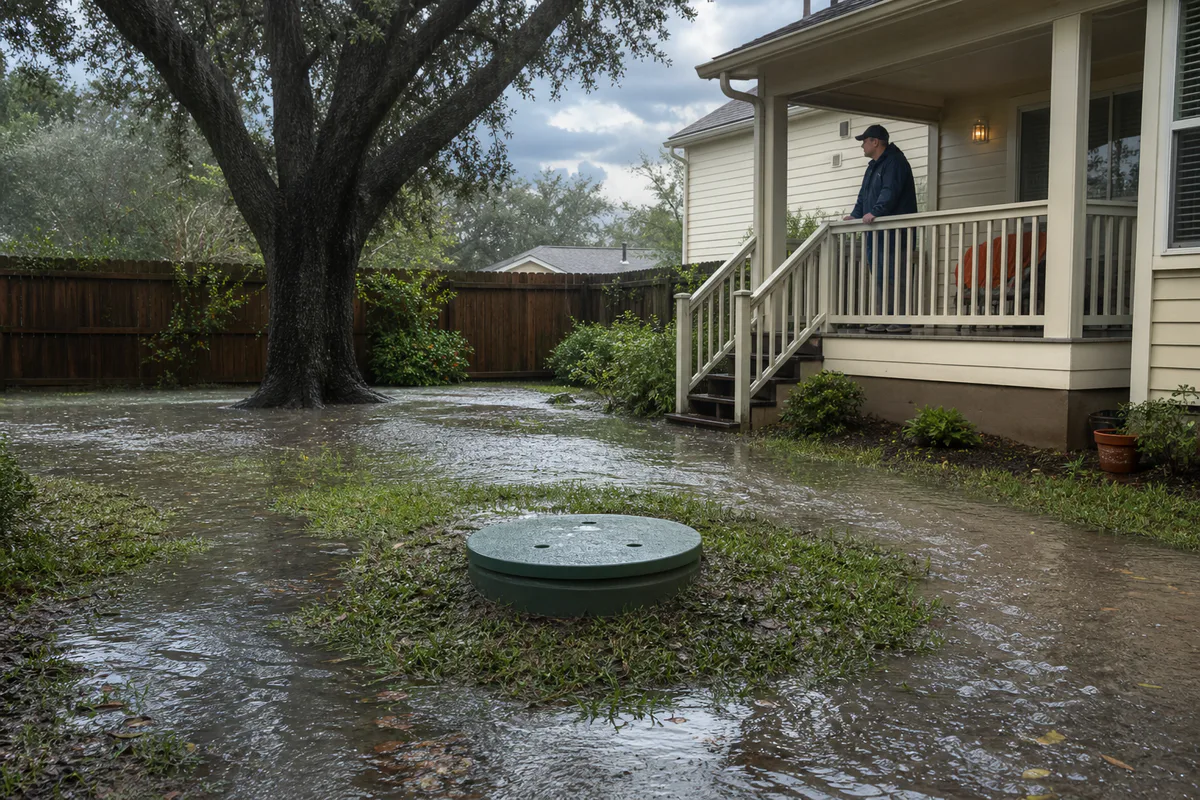
A flooded yard changes how a septic system behaves. The drainfield cannot accept water normally, electrical parts may be unsafe, and an empty tank may shift or float. Storm advice needs to account for all three.
What should you do before the storm?
Do not empty the tank as a storm precaution
CDC advises keeping a septic tank at least half full before an emergency because an empty tank can collapse or float in saturated ground. Continue your normal maintenance schedule, but do not order a last-minute full pump-out solely to create “extra capacity.”
Know Where Your System Is
You should know where your septic tank, drain field, and cleanout are located. After a storm, floodwater covers everything. If you know where the tank is, you can check for obvious damage (shifted lids, collapsed risers) when the water goes down. If you do not know, your septic service records should have a diagram. If you do not have records, a technician can locate the tank.
Clear Loose Debris
Patio furniture, lawn equipment, and yard debris can end up on top of your septic system during a storm. A heavy object on a tank lid or a piece of debris puncturing a riser can cause damage. Move anything loose away from the tank and drain field area before the storm hits.
Minimize Water Use Before the Storm
In the 24 to 48 hours before a hurricane arrives, reduce water use as much as possible. Run essential laundry and dishes early. Do not take long showers. The less water in the system when the storm hits, the more capacity you have if the drain field gets saturated.
How should you use water during flooding?
Once the storm is active, there is not much you can do for the septic system. But there is one critical rule:
If floodwater is present around the system, cut nonessential water use. CDC specifically recommends limiting toilet flushing, dishwashing, laundry, and showers during an emergency.
If your home is flooding and you are not sure whether the septic system is affected, treat it as if it is. The consequences of wrong are sewage in your living space.
What should you inspect from a safe distance?
Once floodwaters recede and it is safe to go outside, look for these warning signs:
Standing Water Over the Drain Field
Standing water means the soil is still saturated. Stay off the drainfield, reduce water use, and wait for safe access rather than testing the system with a load of laundry.
New Soft Spots or Sinkholes
Floodwater moving through the soil can erode material around the tank and drain field pipes. Soft spots, sunken areas, or small sinkholes near the tank or drain field indicate soil displacement. Do not walk on these areas. The ground may not support your weight.
Shifted or Damaged Tank Components
Check the visible parts of your system. Are the tank lids in place? Are risers intact? Has the ground around the tank shifted? Floating tanks are a real phenomenon in severe flooding. When the surrounding soil is saturated, the empty (or partially full) tank can literally float up out of the ground, breaking connections to pipes.
Sewage Odor
A strong sewage smell that was not there before the storm indicates that something has broken or shifted. Sewage may be surfacing from a damaged tank or drain field. Do not ignore it. The smell will not go away on its own.
Drains Not Working
If your drains are slow or backing up after the flood, the system is not processing wastewater. This could be a saturated drain field, a broken pipe, or sediment that has clogged the system. Stop using water and call for service.
When should you call for an inspection?
Schedule a Professional Inspection
If you suspect damage, arrange a septic inspection after access is safe. Report slow drains, overflow, sewage outside, alarm conditions, shifted lids, or exposed wiring.
Do Not Use the System Until Cleared
Until a professional has inspected the system and cleared it for use, minimize water use as much as possible. If the system has obvious damage (backups, standing sewage, structural damage), do not use it at all until repairs are completed.
Do not pump more than halfway in saturated ground
CDC warns that pumping a flooded tank more than halfway can allow it to float out of the ground. Let the service professional assess soil conditions and tank stability before pumping.
Check for Contamination
Septic flooding can contaminate wells and nearby water sources. If you use a well for drinking water, have it tested after the flood. This is especially important if the well is within 100 feet of the septic system or drain field.
Which Houston properties need extra planning?
Risk follows the property more than the city name. Pay closer attention when the yard has flooded before, the drainfield sits low, the system uses electrical pumps, or the home also relies on a private well.
A Baytown property and a home west of Katy can face different drainage conditions, but both need a map of the tank, drainfield, electrical shutoff, and safe access route.
How should you document storm damage?
Photograph visible changes from stable, dry ground. Keep invoices and inspection findings, and ask the insurer what the policy requires before authorizing non-emergency demolition or replacement.
What is the practical post-storm rule?
After a hurricane, most homeowners are focused on roofs, drywall, and flooring. The septic system is underground and out of sight. But ignoring it can lead to a second wave of problems weeks or months later when a damaged drain field finally fails or a cracked pipe causes a backup.
Get the inspection done early. It is a fraction of the cost of a major repair, and it gives you peace of mind that the system you cannot see is working properly.
If wastewater is backing up or surfacing, follow the emergency septic steps and request urgent service. Otherwise, reduce water use until the ground drains and the system can be assessed safely.
Sources
- CDC, “Guidelines for Septic and Onsite Wastewater Systems” — before, during, and after-flood precautions; retrieved 2026-07-27.
- U.S. EPA, “How to Care for Your Septic System” — water use, drainfield protection, and service records; retrieved 2026-07-27.
- U.S. EPA, “Frequent Questions on Septic Systems” — failure signs and inspection components; retrieved 2026-07-27.
Hurricane and Septic System FAQs
Can a hurricane damage my septic system?
Yes. Flooding can saturate drain fields, shift tanks, clog systems with debris, and contaminate the area with sewage. High water tables during storms put extra stress on systems that are already overdue for service.
What should I do with my septic system before a hurricane?
Seal access points against excess water, know where the components are, and protect electrical equipment. CDC advises keeping the tank at least half full so it is less likely to collapse or float.
How do I know if flooding damaged my septic system?
After floodwaters recede, look for standing water over the drain field, sewage odors, new soft spots in the yard, or drains that are not working properly. Schedule a professional inspection to assess the system.
Is it safe to use my septic system during a flood?
Reduce nonessential water use if floodwater covers the drain field or the ground around the tank is saturated. Stop using the system if sewage is backing up, surfacing, or entering the home.
How soon after a hurricane should I have my septic system inspected?
Wait until access is safe. If you suspect damage, reduce water use and arrange professional inspection and service. Do not touch electrical components until they are dry and safe.
Schedule a Post-Storm Inspection
Share the essentials and we’ll follow up about the right septic service.
Suspect Storm Damage?
Wait for safe access, reduce water use, and request an inspection with the property details.
Get a free estimate