Houston septic repair & pumping
How Often Should You Pump a Septic Tank in Texas?
A Texas-focused guide to using household size, tank capacity, inspection measurements, and service records to plan pumping.
Repair, pumping, inspection, installation, and urgent septic help.
How often should a Texas septic tank be pumped?
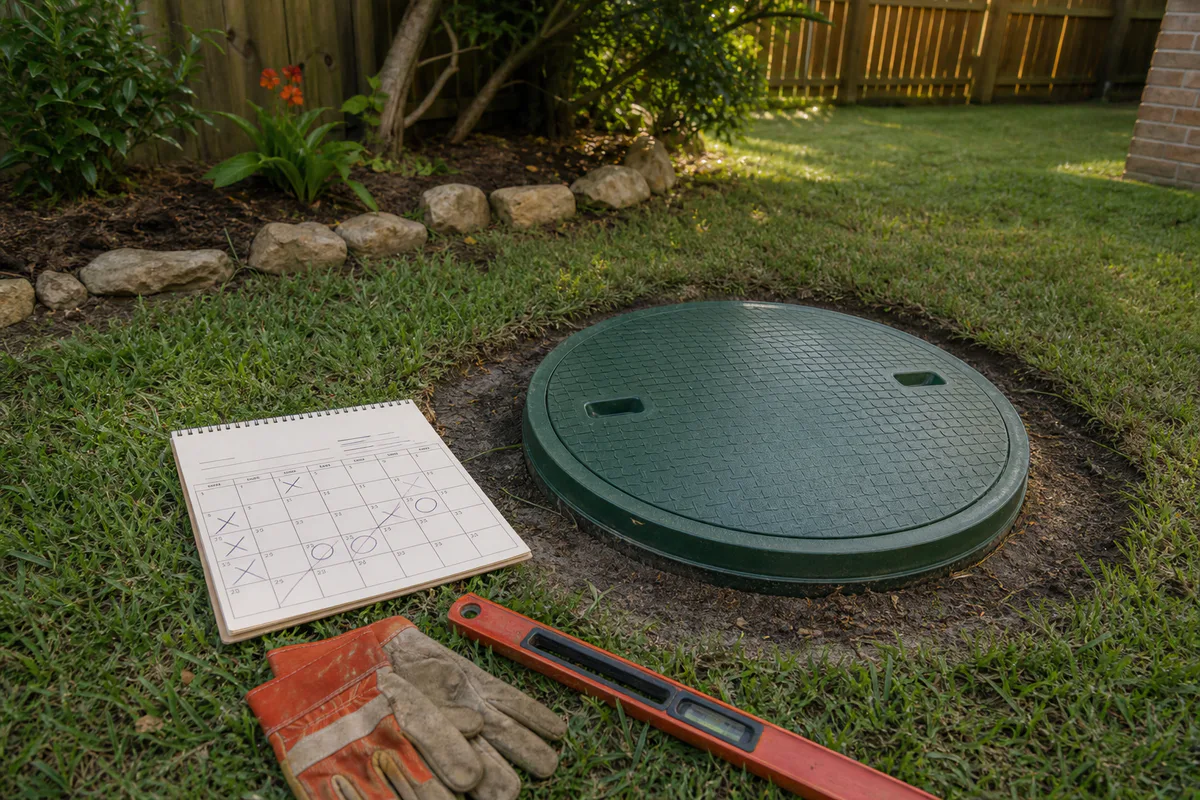
For most households, plan on septic tank pumping every 3 to 5 years. In its “How to Care for Your Septic System” guidance, the U.S. EPA says an average household system should be inspected at least every 3 years and a household tank is typically pumped every 3 to 5 years. TCEQ gives the same general pumping interval for conventional systems.
A household of two people with a 1,500-gallon tank can often go 5 years between pumps. A family of five with a 1,000-gallon tank should be pumping every 3 years, maybe sooner. The numbers are not complicated, but ignoring them leads to expensive problems.
What happens when you wait too long?
A septic tank has a working zone. The bottom layer is sludge, the top layer is scum, and the liquid effluent between them flows to the drainfield.
When sludge builds up past a certain point, solids start flowing out with the effluent. Those solids clog the pores in your drain field soil. Once that happens, your drain field stops absorbing water. You get standing water in the yard, sewage smells, and eventually backups into the house.
A pump-out is routine work. A damaged drainfield is not. Keeping records and checking solids levels is less disruptive than waiting for wastewater to surface in the yard.
Which Houston conditions matter?
Houston weather affects the drainfield more directly than it affects the rate at which solids collect in the tank.
Clay-Heavy Soil
Clay-heavy soil can drain slowly. That does not automatically shorten a tank’s pumping interval, but it makes excess water around the drainfield harder to ignore.
Heat and Humidity
Temperature is not a practical pumping calendar. Household size, wastewater volume, solids, garbage-disposal use, and tank size are the factors EPA tells homeowners to track.
Heavy Rainfall
During heavy rain, saturated soil may accept wastewater slowly. Spread out laundry and other high-water tasks, and do not assume pumping will fix a flooded drainfield.
Hurricane Season
Flooding can damage tanks, electrical components, and drainfields. The Houston hurricane septic guide covers the separate safety steps for a flooded system.
What changes the pumping schedule?
The 3-to-5-year rule is a starting point. These factors push you toward the shorter end of that range:
- More than 4 people in the household. More water use, more solids, faster buildup.
- Garbage disposal use. Food waste adds solids, so frequent use may shorten the interval.
- Smaller tank size. A 750 or 1,000-gallon tank fills faster than a 1,500-gallon tank with the same household.
- Heavy water use. Frequent laundry, long showers, and a lot of dishwasher use push more water through the system.
- Older system. Older tanks may have cracks, worn baffles, or other issues that reduce their effective capacity.
A lightly used vacation home may build solids more slowly, but its calendar should still come from inspection records rather than occupancy alone.
How should you track the schedule?
EPA recommends inspecting an average household system at least every 3 years, with more frequent service for systems that use electrical switches, pumps, or mechanical components. During a septic maintenance visit, ask the provider to record sludge and scum measurements so the next pumping decision is based on your tank rather than a generic calendar.
Some homeowners keep a simple log: the date of the last pump, the company that did it, and what the technician noted. That record helps you plan ahead and gives any new technician a baseline. If you bought the home and do not know when it was last pumped, schedule an inspection right away.
What is a realistic starting schedule?
Use this only as a planning prompt until an inspection establishes how quickly solids build up in your tank:
- 1 to 2 people, 1,000+ gallon tank: Every 4 to 5 years
- 3 to 4 people, 1,000+ gallon tank: Every 3 to 4 years
- 5+ people: Start near the shorter end and confirm with inspection records
- Homes with frequent garbage-disposal use: Ask the inspector whether the solids level supports a shorter interval
These are guidelines, not hard rules. An inspection is the only way to know for sure. But if you follow this schedule, you will stay ahead of most problems.
Why does the inspection matter?
Pumping without inspecting is like changing your oil without checking the engine. A good technician will check your baffles, measure sludge levels, inspect the effluent filter (if your system has one), and look at the overall condition of the tank. That information helps you plan repairs before they become emergencies.
The inspection turns a generic calendar into a record for your actual system. Ask the technician to write down sludge and scum measurements and note the condition of the baffles, filter, and tank.
If you bought the home without service records, request a septic inspection instead of inventing a date. It is the quickest way to establish a useful baseline.
Sources
- U.S. EPA, “How to Care for Your Septic System” — household pumping factors and inspection guidance; retrieved 2026-07-27.
- U.S. EPA, “Frequent Questions on Septic Systems” — the 1-to-3-year inspection and 3-to-5-year pumping guidance; retrieved 2026-07-27.
- TCEQ, “Maintenance of On-Site Sewage Facilities” — Texas guidance for conventional and aerobic systems; retrieved 2026-07-27.
Septic Pumping Frequency FAQs
How often should a septic tank be pumped in Texas?
EPA and TCEQ guidance uses 3 to 5 years as a general interval for conventional household tanks. The right timing depends on tank size, household use, solids accumulation, and inspection findings.
Does Houston weather affect how often I need to pump?
Heavy rain can saturate a drainfield, but weather alone does not determine when the tank needs pumping. Tank size, wastewater volume, solids, and inspection measurements are more useful.
Can I wait longer than 5 years between pumps?
Possibly, but only when inspection records support it. A calendar cannot show the sludge and scum levels inside the tank, so do not extend the interval by guesswork.
How do I know how full my septic tank is?
A service professional can measure sludge and scum and record the levels. EPA recommends inspection at least every 3 years for an average household system, with more frequent checks for mechanical systems.
Schedule Your Pumping
Share the essentials and we’ll follow up about the right septic service.
Unsure When It Was Last Pumped?
Request an inspection or pumping estimate using the service form.
Get a free estimate