Houston septic repair & pumping
Texas Septic Tank Regulations: What Houston Homeowners Need to Know
A plain-language guide to the TCEQ rules, county permit requirements, and what you need to know if you are installing, repairing, or selling a home with a septic system in Texas.
Repair, pumping, inspection, installation, and urgent septic help.
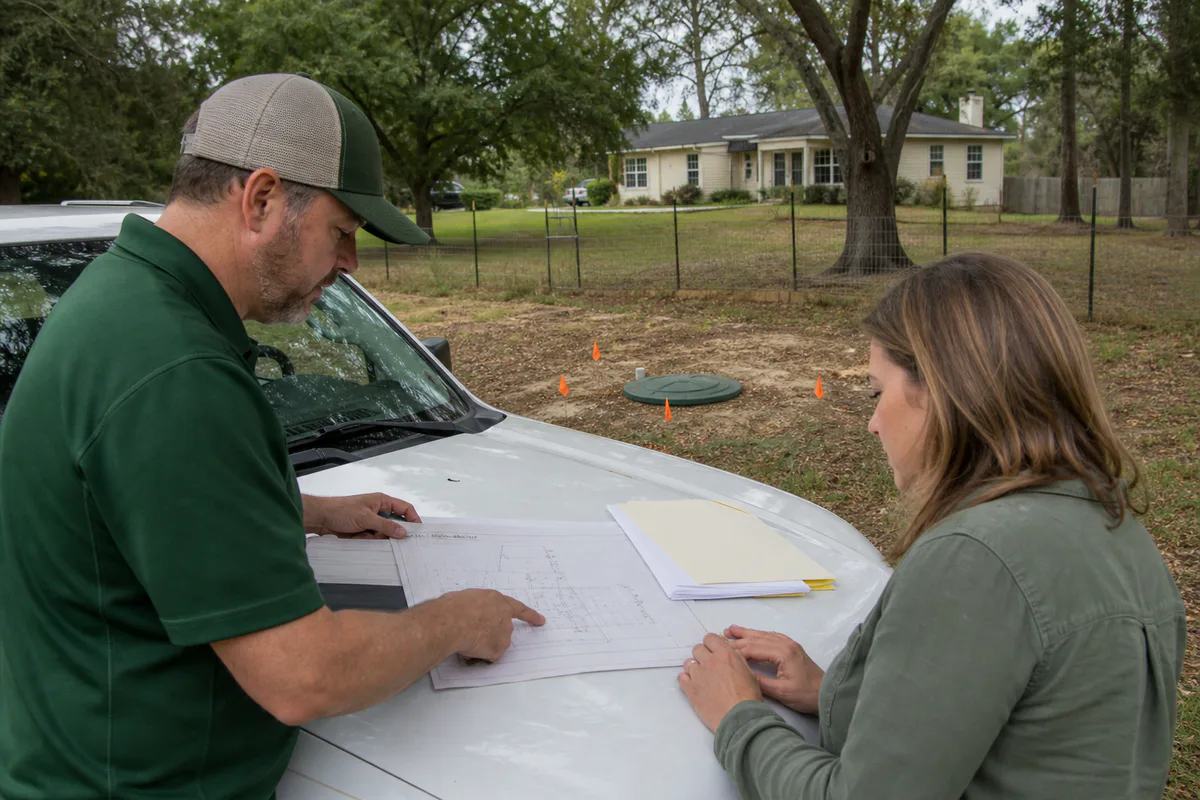
Texas calls a septic system an on-site sewage facility, usually shortened to OSSF. The state writes the baseline rules. A local authorized agent often handles the permit and inspection. That division is why advice from another county may be useless for your address.
Which Texas rules govern septic systems?
The Texas Commission on Environmental Quality (TCEQ) regulates on-site sewage facilities (that is the official term for septic systems) under Title 30, Texas Administrative Code, Chapter 285. This is the state-level rulebook that sets minimum standards for how septic systems are designed, installed, and maintained in Texas.
Chapter 285 covers things like:
- Minimum lot sizes for different system types
- Setback distances from property lines, wells, and waterways
- Soil requirements and percolation testing
- Tank sizing based on the number of bedrooms
- Drain field design and sizing
- Licensing requirements for installers and site evaluators
Start with TCEQ’s Chapter 285 rules, then check the local authorized agent. System type and site conditions determine which licensed roles and approvals apply.
Who issues the local permit?
A county, city, river authority, or other authorized agent may administer the local OSSF program. Confirm jurisdiction from the property address before paying fees or submitting plans.
Harris County
Harris County Public Health manages OSSF work in its jurisdiction. Municipal boundaries and delegated authority can complicate an address, so verify the responsible office first.
Fort Bend County
Fort Bend County Health and Human Services publishes OSSF requirements and coordinates with county permitting. A Sugar Land-area property may still need a jurisdiction check based on its exact location.
Montgomery County
Montgomery County Environmental Health administers OSSF requirements for addresses in its program. Do not assume a lake-area or municipal property follows the same path as an unincorporated parcel.
Other Houston-Area Counties
Requirements and responsible offices vary outside the three counties above. Confirm the authorized agent for the exact property address. If you need a septic inspection, ask how the inspector will verify the permit history and local requirements.
What happens before a new installation?
A new or replacement system generally follows these stages:
- Site evaluation. A licensed site evaluator visits the property, checks soil conditions (percolation test or soil profile), measures lot size, and determines what system type your property can support.
- System design. A licensed installer or engineer designs the system based on the site evaluation. The design includes tank size, drain field layout, and any special requirements for your soil type.
- Permit application. The required party submits the site information, design, and application to the authorized agent.
- Installation. Work begins only after the required authorization is issued.
- Final inspection. A county inspector visits the site to verify the installation matches the approved plans. The system cannot be used until it passes inspection.
System choice is a site and permitting decision before it is a price decision. The septic installation overview explains the questions to settle before requesting comparable bids.
Does a septic repair need a permit?
It depends on what changes. Routine maintenance is not the same as an alteration. Drainfield replacement, capacity changes, or system-type changes can trigger authorization requirements. Describe the proposed septic repair to the local authority before work starts.
What changes when a home is sold?
Texas does not have a statewide Time-of-Transfer law (some states require a septic inspection and certification before any property sale). However, that does not mean you are off the hook:
- A lender may request it. Requirements depend on the loan, property, and underwriting conditions.
- Buyers request it. Even without a lender requirement, most buyers (or their agents) will request a septic inspection as part of the due diligence period.
- Local rules may apply. Some counties or municipalities may have their own inspection requirements for property transfers.
Order the septic inspection early enough to review the permit record and investigate any finding. The inspection report informs the transaction; it does not replace the local authority’s decision on compliance.
Do aerobic systems have different requirements?
Yes. Aerobic systems have mechanical and disinfection components. TCEQ’s maintenance guidance explains licensed-provider duties and notes that local permitting authorities may adopt stricter requirements. Check the permit, maintenance contract, and local rules together.
Which license should you verify?
In Texas, the people who design, install, and inspect septic systems must be licensed by TCEQ. This includes:
- Authorized On-Site Sewage Facility (OSSF) Installer - Licensed to install and repair systems
- Site Evaluator - Licensed to evaluate soil and site conditions
- Designated Representative - Licensed to represent a county in inspections
- Maintenance Provider - Licensed to maintain aerobic systems
Ask which individual will perform or supervise the work and which TCEQ license applies. “Licensed company” is too vague because TCEQ licenses specific OSSF roles.
What should a homeowner do first?
For most Houston homeowners with an existing septic system that is working fine, the practical takeaway is: keep up with regular pumping and maintenance, and make sure any work done on your system is permitted and inspected. If you are buying or selling a home, get the inspection done early. If you are installing a new system, work with a licensed installer who handles the permit process from start to finish.
Start with the property address, permit history, and local authorized agent. Those three facts prevent a surprising amount of bad advice.
Sources
- TCEQ, “Chapter 285: On-Site Sewage Facilities” — statewide OSSF rules; retrieved 2026-07-27.
- TCEQ, “Occupational Licenses: On-Site Sewage Facilities” — installer, evaluator, representative, and maintenance roles; retrieved 2026-07-27.
- TCEQ, “Maintenance of On-Site Sewage Facilities” — aerobic maintenance and local-authority notes; retrieved 2026-07-27.
Texas Septic Regulations FAQs
What is TCEQ and why does it matter for my septic system?
TCEQ is the Texas Commission on Environmental Quality. They set the rules for on-site sewage facilities (septic systems) in Texas under 30 TAC Chapter 285. Any septic installation, repair, or modification must comply with their standards.
Do I need a permit to install a septic system in Houston?
A new OSSF generally requires authorization through the local permitting authority. The responsible office and submittal details depend on the property address, so confirm them before design or excavation begins.
Does Texas have a Time-of-Transfer septic inspection law?
Texas does not have a statewide Time-of-Transfer law. However, many lenders, buyers, and local jurisdictions require a septic inspection before a property sale closes. Check with your county and your lender.
What happens if my septic system does not meet TCEQ standards?
The local authorized agent can require repair or other corrective action for a malfunctioning or unauthorized system. The remedy depends on the permit history, site, system type, and finding.
Who handles septic permits in Harris County?
Harris County Public Health handles septic permitting for Harris County addresses. Fort Bend County Environmental Health and Montgomery County Environmental Health handle their respective areas.
Schedule a Septic Inspection
Share the essentials and we’ll follow up about the right septic service.
Need an Inspection or Permit-Related Quote?
Share the property address, system type, and known permit history.
Get a free estimate